Video credit: Ergonx / YouTube — “Best Work Boots for Plantar Fasciitis and Heel Pain.”
If your workday starts with a few steps that feel like somebody planted a thumbtack inside your heel, your work boots may deserve some serious attention.
Plantar fasciitis can make an ordinary eight-hour shift feel much longer. Add concrete floors, ladders, uneven ground, heavy tools and several thousand steps, and your feet can feel completely worn out by quitting time.
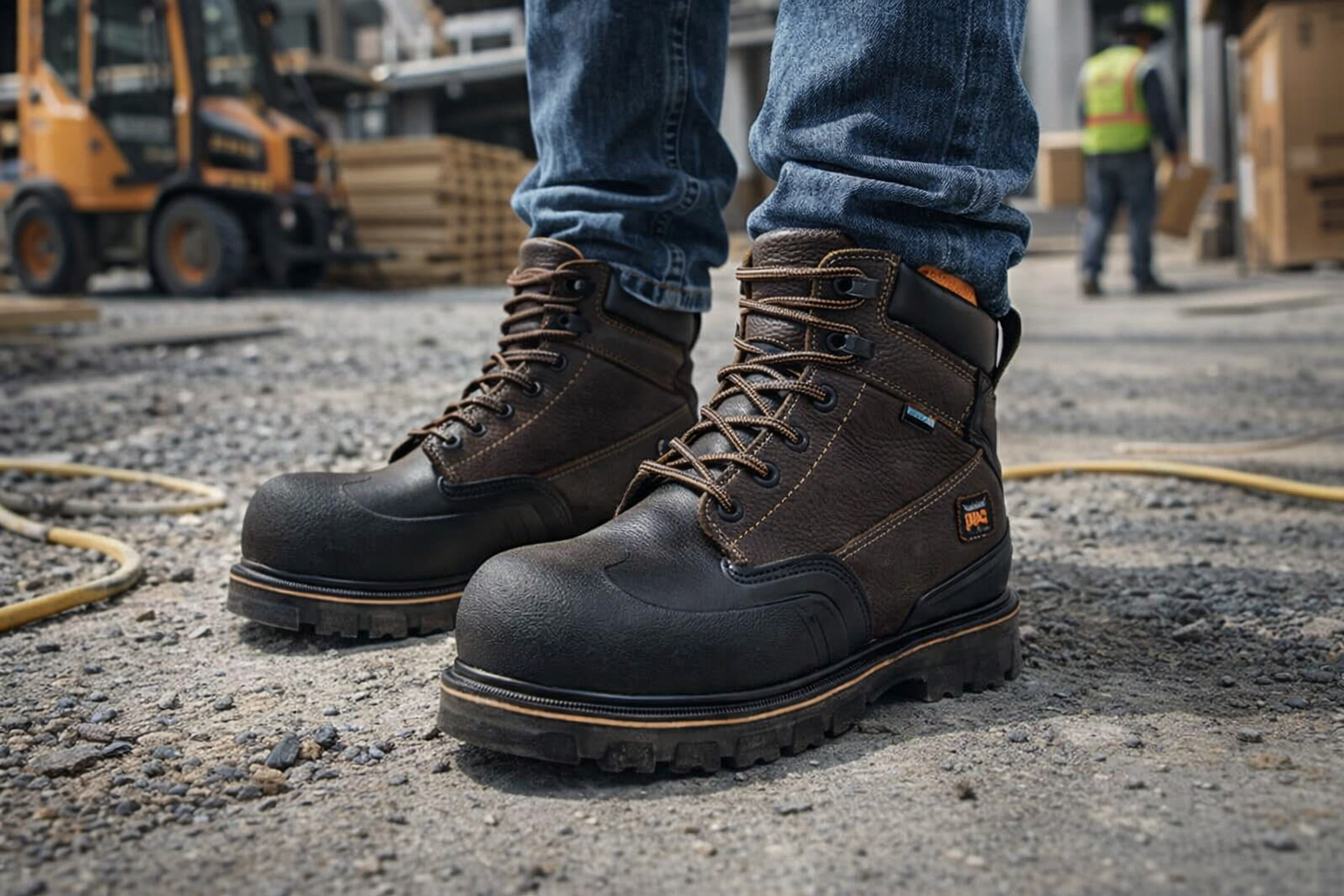
The good news? You don’t necessarily have to choose between safety and comfort.
The best work boots for plantar fasciitis can combine supportive footbeds, useful cushioning, stable heels, roomy toe boxes and safety features needed for demanding jobs.
And that is what this guide is about.
We’ve looked beyond simply asking which boot feels soft in the store. A genuinely useful plantar-fasciitis work boot needs to remain supportive after hours of standing and walking.
So, which boots deserve a place on your shortlist in 2026?
Best Work Boots for Plantar Fasciitis: Quick Picks
| Work Boot | Best For | Standout Feature |
|---|---|---|
| Wolverine Overpass | Best overall | Cushioning, flexibility and safety protection |
| KEEN Utility Lansing Mid | Wide feet and outdoor work | Roomy toe box and supportive platform |
| Timberland PRO Pit Boss | Best value | Worksite protection and cushioning |
| Thorogood American Heritage | Premium leather comfort | Wedge-style platform and substantial footbed |
| Carhartt Rugged Flex Composite Toe | Heavy-duty work | Flexible construction and safety toe |
| Timberland PRO Titan | Workers wanting lighter safety footwear | Composite safety-toe construction |
| Orthofeet Granite | Maximum adjustability | Orthotic-friendly design |
If you already have flat feet, you may also want to compare these choices with our guide to the best work boots for flat feet.
What Is Plantar Fasciitis?
Plantar fasciitis involves the plantar fascia, a strong band of tissue running along the bottom of the foot from the heel toward the toes.
Think of it as a built-in support strap for your foot. Every time you walk, it helps support the arch and handle forces generated by your body weight.
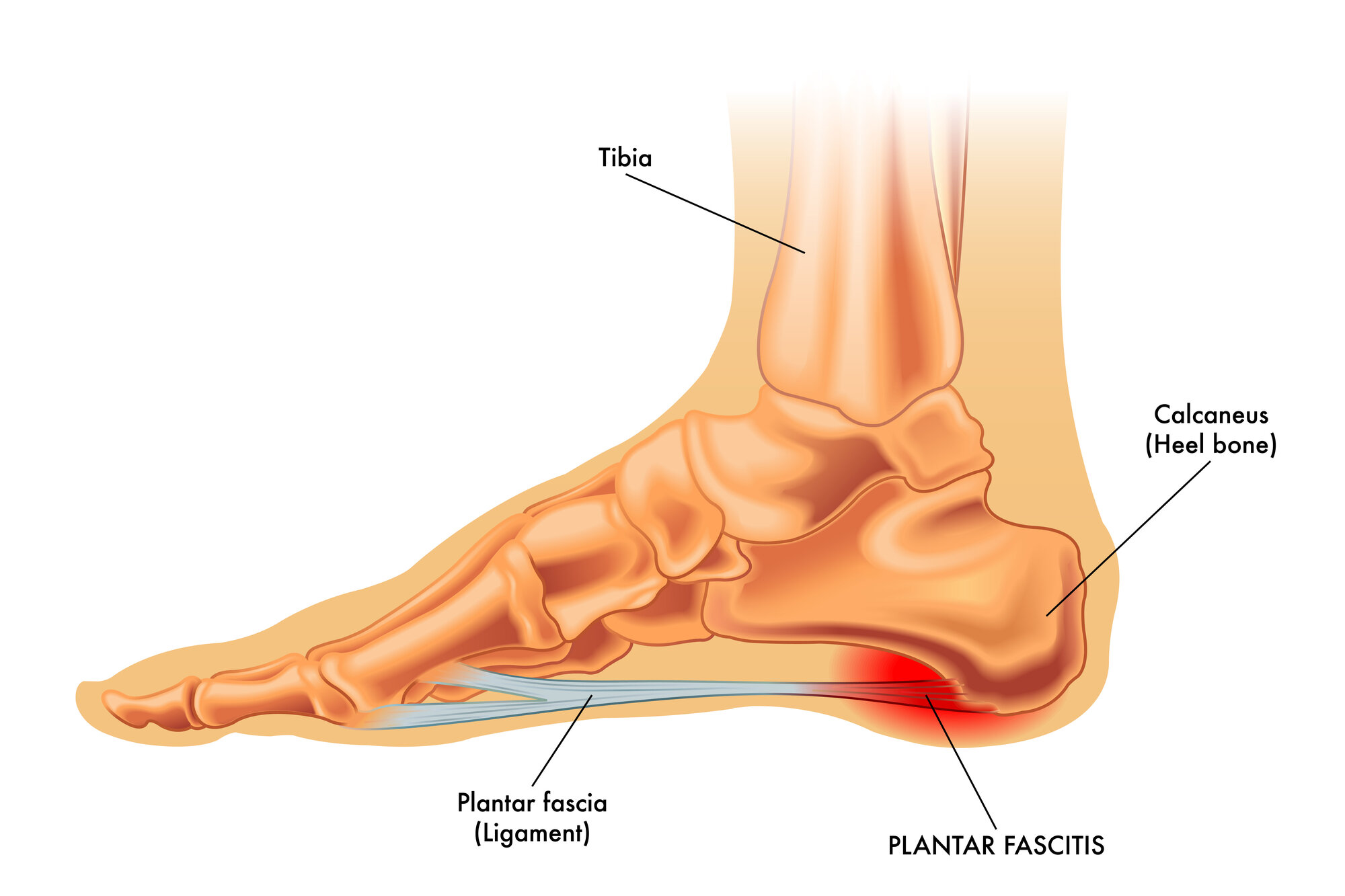
When the tissue becomes irritated, one of the classic symptoms is sharp pain around the bottom of the heel. The discomfort can be especially noticeable during the first few steps after getting out of bed or after sitting for a while. Long periods of standing can also bring the pain back.
That makes plantar fasciitis particularly frustrating for people whose jobs require them to stay on their feet.
Construction workers, warehouse employees, factory workers, mechanics, retail employees and other tradespeople can spend much of the day standing or walking on hard surfaces.
Read Mayo Clinic’s plantar fasciitis symptoms and causes guide
Work boots cannot diagnose or cure plantar fasciitis. However, the right footwear can be an important part of making long periods on your feet more manageable.
Why Your Work Boots Matter So Much
Here’s the uncomfortable truth: a pair of boots can look incredibly tough while being surprisingly unfriendly to your feet.
Some traditional work boots are heavy, rigid and equipped with relatively basic insoles. That’s fantastic when you need protection from falling objects or rough terrain. But if the footbed offers little support and the boot doesn’t fit correctly, your feet may complain loudly after several hours.
Imagine standing on a concrete floor all day wearing a pair of shoes with the cushioning of a wooden cutting board.
Exactly.
That is why plantar-fasciitis-friendly work boots should be evaluated for more than leather quality or toe protection.
What to Look for in Work Boots for Plantar Fasciitis
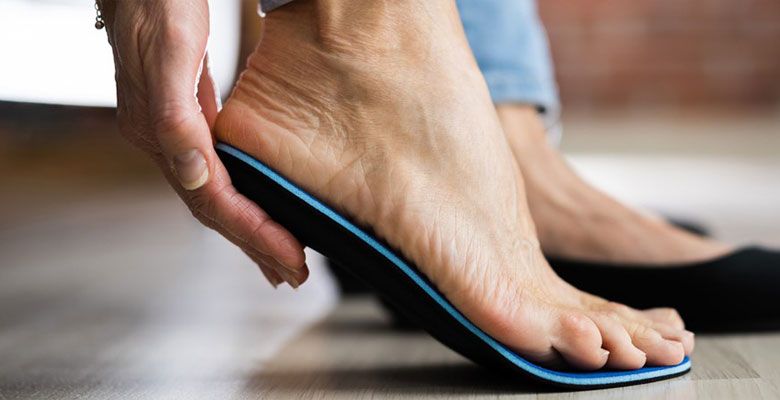
1. Good Arch Support
Your work boot should provide a stable platform beneath your foot rather than leaving the arch completely unsupported.
The exact amount of arch support you need depends on your foot shape. More support isn’t automatically better. A very aggressive arch can feel awful if it doesn’t match your foot.
2. A Supportive Heel Area
A stable heel counter can help keep the rear of the foot from moving excessively inside the boot.
Your heel should feel secure without being squeezed.
3. Shock-Absorbing Cushioning
Cushioning matters when you’re walking across concrete, steel flooring or other unforgiving surfaces.
Look for a boot with a well-designed midsole and footbed rather than simply choosing the softest insole you can find.
4. Removable Footbeds
This is one of the most useful features for workers who need additional support.
A removable factory insole gives you the option of replacing it with an aftermarket insert or a professionally recommended orthotic.
That can turn a decent work boot into a much more personalized setup.
5. Enough Toe Room
Your toes shouldn’t be jammed together.
A safety toe can be protective without feeling like a metal box has been strapped around your foot.
6. Appropriate Heel Height
A completely flat boot isn’t necessarily the best choice for every worker with heel pain. A modest heel-to-toe difference may feel more comfortable for some people.
However, there is no single heel height that works for every foot. Comfort, fit and your specific condition matter.
7. The Right Safety Features
If your workplace requires safety-toe footwear, electrical-hazard protection, slip resistance or other protective features, comfort cannot come at the expense of jobsite safety.
OSHA’s foot-protection rules are based on workplace hazards, including risks from falling or rolling objects, punctures and electrical exposure.
See OSHA’s foot-protection guidance
Always follow your employer’s footwear requirements and the safety standards applicable to your workplace.
1. Wolverine Overpass — Best Overall Work Boot for Plantar Fasciitis
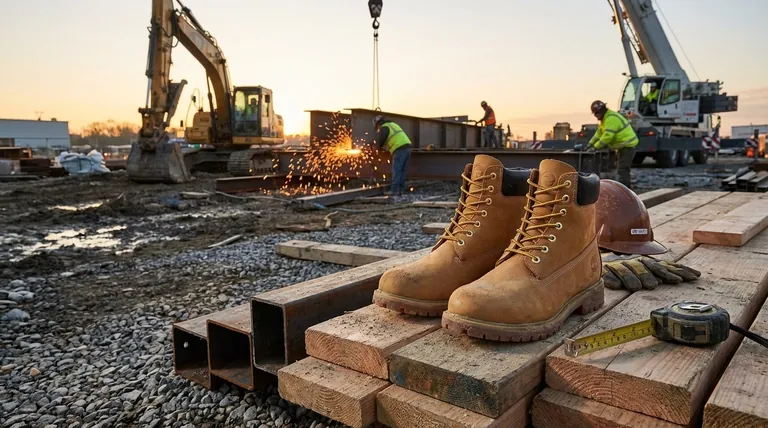
The Wolverine Overpass is an appealing choice for workers who want a modern work boot that doesn’t feel like a tank strapped to each foot.
Its combination of safety-toe options, cushioning, flexible construction and waterproof versions makes it a strong candidate for long shifts.
The Overpass is particularly interesting for workers who spend a lot of time walking rather than standing in one location.
Why It Stands Out
- Comfort-focused construction
- Shock-absorbing cushioning
- Flexible feel compared with many traditional work boots
- Safety-toe options
- Waterproof versions available
- Useful choice for active jobsites
For someone who wants a balance between traditional work-boot toughness and sneaker-like movement, this is one of the more interesting options.
The big lesson here is that cushioning doesn’t have to mean floppy. You want a boot that absorbs impact while still giving your foot a stable platform.
If your workplace regularly has oil or wet surfaces, also check out our guide to the best oil- and slip-resistant work boots.
2. KEEN Utility Lansing Mid — Best for Wide Feet and Outdoor Work
The KEEN Utility Lansing Mid is particularly interesting for workers who dislike the cramped feeling that some safety boots create around the toes.
KEEN’s asymmetrical safety-toe approach is designed around the shape of the left and right foot rather than simply treating both toes as identical boxes.
That’s important because your feet are not identical twins wearing matching uniforms.
A roomy toe area can be a major comfort advantage during long shifts, especially when your feet naturally swell a little throughout the day.
Why Consider the Lansing Mid?
- Roomy toe-box design
- Safety-toe protection
- Supportive underfoot platform
- Waterproof versions
- Slip-resistant outsole options
- Useful for construction and outdoor work
Workers who spend their days moving between concrete, dirt, gravel and wet surfaces may appreciate the combination of protection and outdoor traction.
It’s also worth considering if traditional narrow safety boots make your feet feel like they’ve been packed into carry-on luggage.
For muddy outdoor jobs, our guide to the best farm and ranch work boots is another useful resource.
3. Timberland PRO Pit Boss — Best Value
The Timberland PRO Pit Boss has been a popular name in work footwear for years, and its straightforward design is exactly why it remains relevant.
It is built around the traditional work-boot formula: substantial leather, safety-toe options, rugged outsole construction and a comfort-focused footbed.
For workers who don’t want to spend premium money but still need a serious work boot, the Pit Boss can be a practical starting point.
Why It Works for Long Shifts
- Traditional durable work-boot construction
- Safety-toe versions available
- Supportive footbed
- Rugged outsole
- Designed for demanding work environments
- Widely available
However, don’t buy any boot simply because it has the word “comfort” on the box.
Try it on.
Walk around.
Check your heel.
Check your arch.
Check your toes.
If something feels wrong in the store, there’s a very good chance it won’t magically become wonderful after eight hours on concrete.
For another rugged footwear category, see our guide to the best Red Wing work boots.
4. Thorogood American Heritage — Best Premium Leather Choice
If you like classic leather work boots but still want a comfort-oriented design, the Thorogood American Heritage deserves a place on your shortlist.
Its wedge-style outsole and substantial footbed make it especially appealing to workers who spend long periods standing and walking on relatively flat surfaces.
The wedge platform also has a distinctive advantage: there isn’t a deep heel lug constantly pushing against the floor with every step.
For some workers, that creates a smooth, stable feel.
Best For
- Construction workers
- Carpenters
- Workers on concrete
- People who like traditional leather boots
- Workers wanting a premium build
Like every boot on this list, personal fit comes first. A boot that feels amazing on one person’s foot can feel completely wrong on another.
If you work around sparks, hot materials or welding equipment, our guide to the best work boots for welding may be more useful.
5. Carhartt Rugged Flex Composite Toe — Best for Heavy-Duty Work
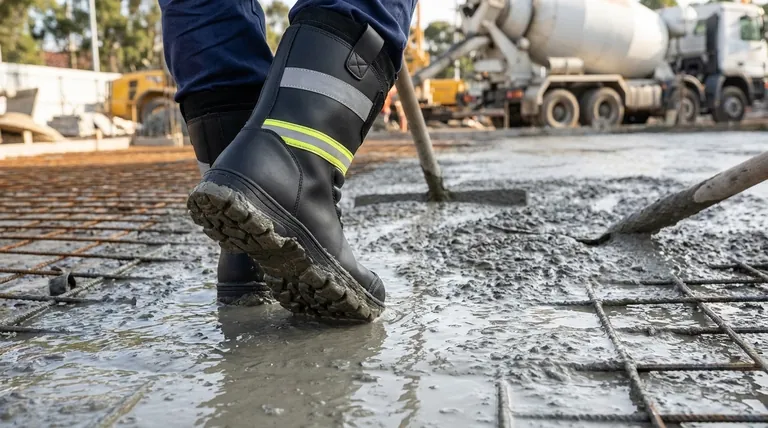
Carhartt’s Rugged Flex composite-toe work boots are worth considering if you want safety protection without automatically reaching for a heavy steel-toe boot.
Composite safety toes can be lighter than steel, which may be attractive to workers who walk constantly during the day.
Less weight doesn’t magically cure plantar fasciitis, but lighter footwear can feel less tiring over a long shift.
Why It Deserves a Look
- Composite safety-toe options
- Flexible construction
- Work-focused durability
- Comfort-oriented footbed options
- Suitable for demanding jobs
Think about it like carrying a toolbox.
One pound doesn’t sound like much when you’re standing still.
Carry that extra pound around for eight or ten hours and suddenly your opinion changes.
The same basic principle applies to footwear weight.
6. Timberland PRO Titan — Best Lightweight Safety-Toe Option
If you’re constantly walking, climbing stairs or moving between work areas, a lighter safety boot may be worth investigating.
The Timberland PRO Titan uses composite safety-toe construction in models designed to reduce the weight associated with traditional steel-toe footwear.
It also belongs to Timberland PRO’s comfort-focused work range, making it an appealing choice for people who want a more athletic feel from their safety footwear.
Who Should Consider It?
- Electricians
- Maintenance workers
- Warehouse employees
- Construction workers who walk frequently
- Workers who dislike heavy steel-toe boots
If your work requires steel specifically, however, don’t substitute a composite toe simply because it feels lighter. Always follow your workplace safety requirements.
For more options, browse our steel toe work boots collection.
7. Orthofeet Granite — Best for Adjustability and Orthotic-Friendly Comfort
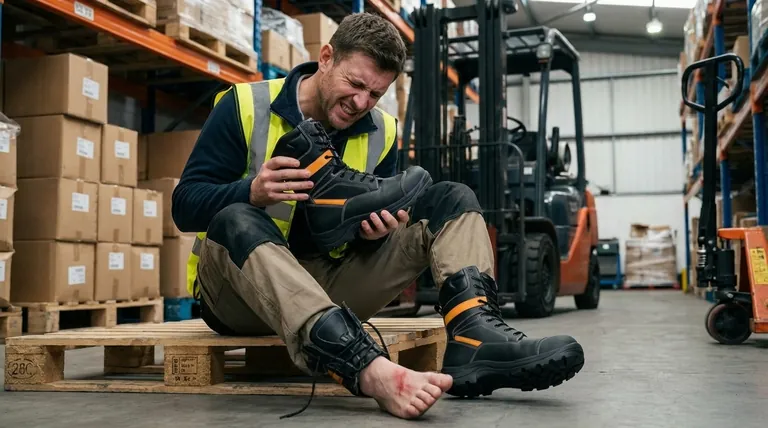
The Orthofeet Granite takes a somewhat different approach from traditional industrial boots.
Rather than focusing entirely on rugged leather and heavy-duty construction, Orthofeet emphasizes adjustability, cushioning and accommodation for different foot shapes.
That can make it interesting for people who struggle to find a conventional work boot that doesn’t aggravate their feet.
Potential Advantages
- Adjustable fit
- Orthotic-friendly design
- Extra cushioning
- Roomier construction
- Useful for workers prioritizing foot comfort
Before purchasing, make sure the exact model meets the safety requirements of your workplace. Comfort is important, but protective footwear still has to protect you from the hazards you actually face.
Why Insoles Can Make a Huge Difference
Here’s something many workers overlook:
You don’t always need to replace the entire boot.
Sometimes the boot is perfectly usable but the factory insole is flat, worn or simply not suitable for your feet.
A supportive replacement insole may change the way the boot feels dramatically.
Look for an insert that provides the amount of arch support your foot actually needs and fits properly inside the boot.
Do not simply buy the thickest insole you can find.
More padding isn’t automatically more support.
A very thick insert can reduce the internal space of the boot, squeeze the toes and change the fit around the heel.
That’s the exact opposite of what you want.
Mayo Clinic notes that orthotics and supportive footwear can be part of conservative management for plantar fasciitis, along with approaches such as stretching and activity modification.
See Mayo Clinic’s plantar fasciitis treatment information
How to Choose the Right Work Boot for Your Foot
If You Have Wide Feet
Start with boots that offer wide sizing or naturally roomy toe boxes. Don’t assume that simply buying one size larger will solve the problem. A longer boot is not necessarily a wider boot.
If You Have High Arches
You may prefer a footbed that provides cushioning without creating an uncomfortable pressure point beneath the arch.
If You Have Flat Feet
Look for a stable platform and an insole that provides appropriate support. Our guide to work boots for flat feet can help you compare additional options.
If You Walk All Day
Weight becomes more important. A lighter boot with good cushioning may be preferable to an extremely heavy boot.
If You Stand Mostly on Concrete
Prioritize cushioning and stability. A supportive footbed can make a noticeable difference during long periods of standing.
If Your Feet Get Hot
Breathability and moisture management become much more important. Take a look at our guide to the best breathable work boots for additional ideas.
How Should Work Boots Fit if You Have Plantar Fasciitis?
A good fit should feel secure without feeling restrictive.
Your heel shouldn’t slide dramatically up and down.
Your toes shouldn’t be pressed against the front.
Your arch shouldn’t feel as if the boot has a small mountain poking into it.
And your foot shouldn’t be forced into an unnatural position just to get the laces closed.
Try boots on later in the day if possible. Feet can swell during the day, especially after several hours of standing and walking.
Wear the socks you normally use at work.
And if you use orthotics, take them with you when trying on new boots.
Don’t Ignore the Midsole
People often inspect the leather, stitching and outsole first.
That’s understandable. Those are the things you can see.
But the midsole is doing a huge amount of work underneath your feet.
It helps manage impact and contributes to how the boot feels with every step.
A boot can have beautiful leather and fantastic stitching while its underfoot cushioning is completely wrong for you.
It’s like buying a luxury car and then discovering someone replaced the seats with concrete.
Looks great.
Not exactly relaxing.
Can Work Boots Cure Plantar Fasciitis?
No.
Work boots should not be marketed as a cure for plantar fasciitis.
Their job is to provide appropriate protection, support and comfort while you work.
Plantar fasciitis often improves with conservative care, but recovery can take time. Depending on the individual, management may include activity modification, stretching, physical therapy, supportive footwear or orthotics.
The American Academy of Orthopaedic Surgeons notes that most people improve without surgery.
Read the AAOS plantar fasciitis information
If your heel pain is severe, persistent or getting worse, speak with a qualified healthcare professional rather than trying to solve everything with a new pair of boots.
Simple Ways to Make a Long Shift Easier on Your Feet
Rotate Your Work Boots
If you own two suitable pairs, alternating them can give each pair time to dry and recover between shifts.
Replace Worn Insoles
Don’t wait until the insole is completely flattened.
When cushioning and support have visibly collapsed, your feet are effectively standing on the memory of an insole.
Replace Worn-Out Boots
A boot can look perfectly respectable on the outside while the cushioning underneath has deteriorated.
Wear Suitable Work Socks
Socks with appropriate cushioning and moisture management can improve the overall feel of your footwear.
Stretch Regularly
Calf and plantar fascia stretching is commonly included in conservative approaches to plantar fasciitis. If you have significant pain, ask a healthcare professional or physical therapist which exercises are appropriate for you.
Don’t Ignore Persistent Pain
If you’re changing your walking pattern to avoid heel pain, that’s a sign the problem deserves attention.
When Should You See a Doctor?
A new pair of work boots is not a substitute for medical evaluation.
Consider seeking professional advice if:
- Your heel pain is persistent or worsening.
- The pain is interfering with normal walking.
- You have significant swelling or another unusual symptom.
- You cannot perform your normal work duties comfortably.
- Your symptoms continue despite improving your footwear and daily habits.
- You are unsure whether the pain is actually plantar fasciitis.
Heel pain can have several possible causes, so an accurate diagnosis matters.
Work Boots for Plantar Fasciitis vs. Regular Work Boots
The difference isn’t necessarily that plantar-fasciitis-friendly boots look completely different.
In fact, many look like ordinary work boots.
The difference is usually underneath your feet.
| Feature | Basic Work Boot | Plantar-Fasciitis-Friendly Focus |
|---|---|---|
| Arch support | May be minimal | More deliberate support |
| Footbed | Basic | Supportive and/or removable |
| Cushioning | Varies widely | Usually a major consideration |
| Toe room | Depends on model | Roomy fit preferred when appropriate |
| Orthotic compatibility | Not always good | Highly desirable |
| Weight | Can be heavy | Worth considering for long walking shifts |
What About Wellington Work Boots?
Pull-on Wellington-style work boots can be convenient for workers who frequently remove and put on their footwear.
However, if plantar fasciitis is a concern, pay particular attention to the footbed, heel stability and internal fit.
A pull-on boot should hold your heel securely without allowing excessive movement.
For more options, check out our guide to the best Wellington work boots.
What About Breathability?
Hot, sweaty feet aren’t directly the same problem as plantar fasciitis, but they can make a long shift considerably less pleasant.
Moisture can contribute to blisters and general discomfort, while overheated feet can make an already exhausting workday feel even worse.
Look for moisture-managing socks and boots with appropriate ventilation for your working environment.
Of course, waterproof boots aren’t going to breathe like lightweight running shoes. That’s the trade-off.
For more ideas, see our best breathable work boots guide.
Final Ranking: Best Work Boots for Plantar Fasciitis in 2026
- Wolverine Overpass — Best overall combination of cushioning, flexibility and protection.
- KEEN Utility Lansing Mid — Excellent choice for roomy toe space and outdoor work.
- Timberland PRO Pit Boss — Strong value for workers who prefer traditional work boots.
- Thorogood American Heritage — Premium leather option with a comfort-focused wedge platform.
- Carhartt Rugged Flex Composite Toe — Good option for demanding work and workers who prefer composite safety toes.
- Timberland PRO Titan — Attractive choice for workers who prioritize lighter safety footwear.
- Orthofeet Granite — Worth considering when adjustability and orthotic accommodation are high priorities.
So, Which Work Boot Should You Buy?
If you want one starting point, the Wolverine Overpass is our favorite all-around option for workers looking for a combination of protection, cushioning and flexibility.
If your biggest problem is cramped toes, take a close look at the KEEN Utility Lansing Mid.
If you’re shopping on a tighter budget, the Timberland PRO Pit Boss remains a sensible option.
If you love classic leather boots and want a premium construction, the Thorogood American Heritage is worth trying.
And if weight is one of your biggest complaints about traditional safety boots, consider a composite-toe model such as the Timberland PRO Titan or another lightweight safety boot that meets your workplace requirements.
But here’s the most important part:
Don’t buy a work boot simply because somebody else says it’s the best.
Your feet get the final vote.
A boot can have thousands of five-star reviews and still feel terrible on your particular foot. Foot shape, arch height, width, gait, work surface, shift length and required safety features all matter.
The ideal work boot should feel secure, supportive and comfortable before you even start the shift.
Because when you’ve got eight, ten or twelve hours of work ahead of you, your feet shouldn’t be the thing you spend the entire day thinking about.
They should simply get on with the job.
More Work Boot Guides
If you’re comparing footwear for different working environments, explore our Red Wing work boot guide, check our oil- and slip-resistant work boot picks, or browse our farm and ranch work boots.
For workers who spend their days climbing, our tower climbing boots for linemen guide may also be useful.
If your job involves welding, see our best work boots for welding recommendations.
And if you need something to keep your lunch cold while those boots are working overtime, check out our best lunch coolers for construction workers.
Image Credits
Images are credited individually beneath each image. Direct image URLs were checked for loading before inclusion. Product availability, boot specifications, safety ratings, materials and designs can change, so check the manufacturer’s current information for the exact model before purchasing.
Medical disclaimer: This article is for general educational information and footwear-shopping guidance. Work boots and insoles are not a guaranteed treatment or cure for plantar fasciitis. If you have persistent, severe or worsening heel pain, consult a qualified healthcare professional for an appropriate diagnosis and treatment plan.
2 thoughts on “Best Work Boots for Plantar Fasciitis in 2026: 7 Supportive Picks for Long Days on Your Feet”