Video credit: TheBootGuy / YouTube — “TIMBERLAND PRO PITBOSS [The Boot Guy Reviews].”
If your workday involves oil, grease, wet concrete, muddy ground, machinery or slick industrial floors, the wrong footwear can turn an ordinary shift into a very unpleasant adventure.
One minute you’re walking along normally. The next, your boots decide to audition for a slapstick comedy.
That’s why choosing the best oil- and slip-resistant work boots is about much more than finding a boot that looks rugged. You need the right outsole, tread pattern, safety features, fit and level of protection for your particular job.
We revisited the classic recommendations from the older oil- and slip-resistant work boot guide and gave the subject a fresh 2026 makeover. The result is a practical guide covering popular choices from Timberland PRO, KEEN Utility, Rocky, Red Wing and 5.11.
Whether you’re a construction worker, mechanic, warehouse employee, landscaper, tradesperson, utility worker or simply someone who spends all day on hard floors, there’s a good chance your feet will appreciate the upgrade.

What Makes a Work Boot Oil- and Slip-Resistant?
First, let’s clear up something that causes plenty of confusion.
Oil resistance and slip resistance are not exactly the same thing.
An oil-resistant outsole is designed to handle exposure to oils and similar substances without deteriorating as quickly. Slip resistance, meanwhile, is about traction and the outsole’s ability to help maintain contact with the surface.
That distinction matters.
A boot can advertise an oil-resistant outsole without necessarily being the best choice for every slippery surface. If your workplace is regularly covered with oil or grease, look for a boot that specifically identifies its outsole as oil- and slip-resistant and, when available, provides information about relevant testing standards.
KEEN Utility, for example, currently describes its work footwear as using oil- and slip-resistant rubber outsoles, while Red Wing’s Traction Tred Lite specifically lists slip resistance for oily-wet conditions.
In other words, don’t choose a boot simply because its tread looks like it belongs on a monster truck. The rubber compound and actual performance matter too.
If your work takes you outdoors and across dirt, fields or rough terrain, you may also want to compare these options with our guide to the best farm and ranch work boots.
Quick Comparison: Best Oil- and Slip-Resistant Work Boots
| Work Boot | Best For | Main Strength | Safety Toe |
|---|---|---|---|
| Timberland PRO Pit Boss 6″ | Best overall | Oil, slip and abrasion resistance | Steel |
| KEEN Utility Cincinnati | Comfort + heavy-duty work | Waterproofing and traction | Carbon/composite depending on version |
| Rocky Alpha Force | Wet and demanding work | Waterproof construction and oil/slip resistance | Composite on selected models |
| Red Wing Traction Tred Lite | Premium choice | Oily-wet slip resistance | Non-metallic |
| 5.11 A.T.A.C. 2.0 Storm | Tactical-style work | Waterproofing, mobility and traction | Depends on version |
1. Timberland PRO Pit Boss 6-Inch — Best Overall
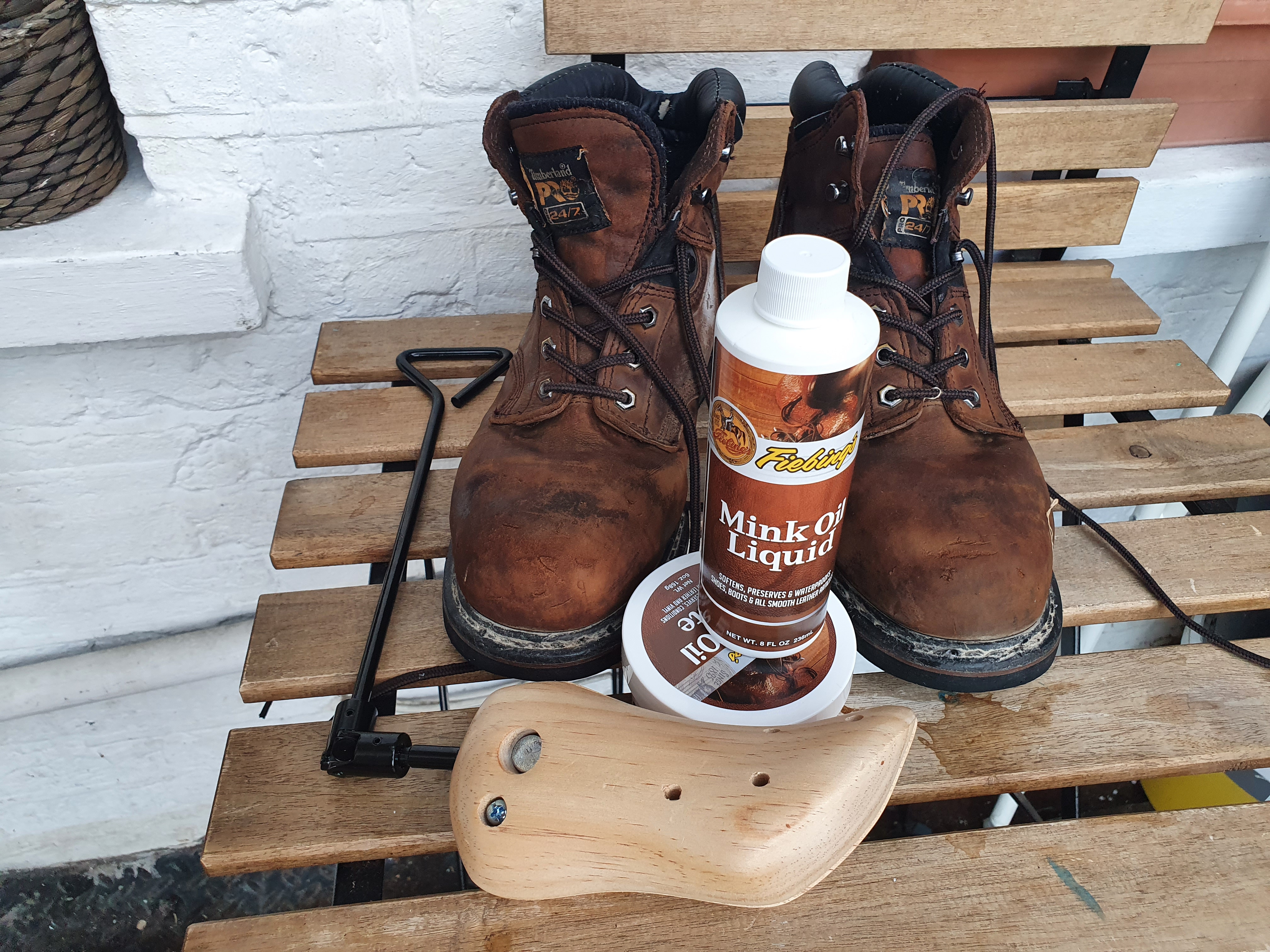
Some work boots become famous for a reason, and the Timberland PRO Pit Boss is one of them.
The current Pit Boss 6-inch steel-toe version combines a rugged nubuck leather upper, steel safety toe, electrical hazard protection and a non-marking rubber outsole that Timberland describes as heat-, oil-, slip- and abrasion-resistant.
That is a pretty serious feature list for a boot that still looks perfectly respectable outside the jobsite.
The Pit Boss also uses Timberland PRO’s 24/7 Comfort Suspension System and an OrthoLite footbed, making it more suitable for long shifts than a basic heavy-duty boot.
Why the Pit Boss Is So Popular
- Steel safety toe
- Electrical hazard protection
- Oil-resistant outsole
- Slip-resistant outsole
- Abrasion-resistant rubber
- Goodyear welt construction
- Supportive comfort system
- Wide-size availability on selected versions
The combination is especially attractive for construction, warehouse, maintenance and general industrial work.
It isn’t the lightest boot you’ll ever put on your feet. But that’s not necessarily a bad thing. If you’re working around heavy equipment and demanding surfaces, a little extra substance can be reassuring.
For another look at rugged Timberland footwear, check out our guide to breathable work boots.
Check the current Timberland PRO Pit Boss specifications
2. KEEN Utility Cincinnati — Best for Comfort and Heavy-Duty Work

KEEN Utility approaches work footwear a little differently.
The brand puts a lot of emphasis on comfort, a roomy toe area and natural foot movement while still providing serious jobsite protection.
The Cincinnati range is particularly interesting for workers who want the traditional look of a leather work boot without feeling like they’re wearing two concrete blocks on their feet.
Selected Cincinnati models feature waterproof leather, waterproof breathable membranes, non-metallic safety toes, electrical hazard protection and oil- and slip-resistant rubber outsoles.
Some versions use carbon-fiber safety toes, while other configurations use different safety-toe materials. That’s important because the exact model number matters.
Why KEEN Utility Deserves a Look
- Oil- and slip-resistant rubber outsole
- Waterproof options
- Comfort-oriented fit
- Non-metallic safety-toe options
- Electrical hazard protection on selected models
- Wide-width options on selected styles
- Removable cushioning footbeds
KEEN also offers different outsole designs depending on the job. Wedge soles are aimed at flat surfaces such as concrete, while lugged designs are more appropriate for uneven outdoor terrain.
That is exactly how work footwear should be chosen: match the boot to the floor rather than simply buying the boot with the biggest tread.
If foot shape is one of your biggest concerns, take a look at our guide to the best work boots for flat feet.
Explore KEEN Utility work boots
3. Rocky Alpha Force — Best for Wet and Rough Conditions

What happens when your job combines oil, rain, mud and long hours on your feet?
You start looking for a boot that can basically tell Mother Nature, “Is that all you’ve got?”
The Rocky Alpha Force is built with that kind of environment in mind.
Selected Alpha Force models feature waterproof construction, full-grain leather, 1000-denier nylon, oil- and slip-resistant RigiTrac outsoles and Rocky Air-Port cushioning. The FQ0006167 version also uses a non-metallic composite safety toe.
Best Features
- Waterproof construction
- Oil- and slip-resistant outsole
- Non-marking outsole
- Composite safety toe on selected versions
- Electrical hazard protection on selected models
- Removable cushioning footbed
- Lightweight nylon construction
The Alpha Force is particularly attractive for public service, utility and outdoor work where waterproofing matters as much as traction.
One important tip: Alpha Force is a family of boots, not one single configuration. Always check the exact model for safety-toe and electrical-hazard requirements before buying.
If you spend a lot of time in mud or uneven ground, our best logger boots guide is another useful comparison.
4. Red Wing Traction Tred Lite — Best Premium Oil- and Slip-Resistant Boot

If your budget allows you to move into premium work boots, the Red Wing Traction Tred Lite deserves serious attention.
The current 3583 model is a six-inch waterproof safety-toe boot with a non-metallic toe, puncture resistance and electrical hazard protection. Red Wing specifically identifies the boot as slip resistant in oily-wet conditions and lists ASTM F3445 for that characteristic.
That’s useful information because it gives shoppers something more meaningful than simply saying “great traction.”
Why It Stands Out
- Waterproof leather
- Non-metallic safety toe
- Puncture resistance
- Electrical hazard protection
- Slip resistance for oily-wet conditions
- Lightweight Traction Tred Lite outsole
- Resoleable construction
The outsole uses a relatively shallow tread pattern rather than giant mountain-bike-style lugs. That makes sense for workers who spend time on concrete, industrial floors and mixed indoor/outdoor surfaces.
It’s a premium option, so the price is higher than the basic work boots on this list. But for someone who spends most of the week in work boots, durability and long-term comfort can make the investment easier to justify.
For more options from the same heritage brand, explore our Red Wing work boot guide.
See the current Red Wing Traction Tred Lite
5. 5.11 A.T.A.C. 2.0 Storm — Best Tactical-Style Option
Not everyone wants a traditional brown leather construction boot.
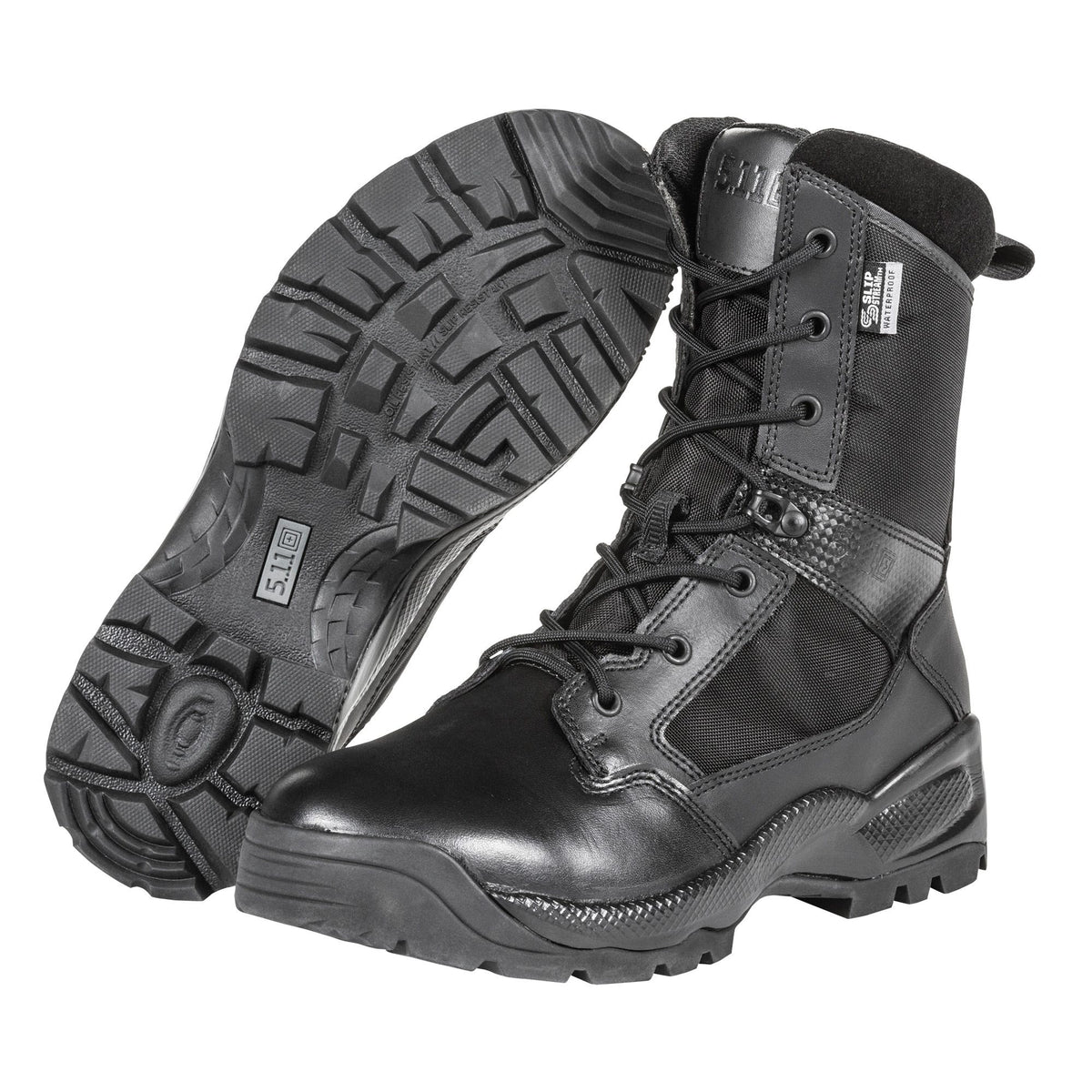
For security professionals, public safety workers and people who prefer tactical footwear, the 5.11 A.T.A.C. 2.0 Storm offers a different approach.
The boot uses a combination of full-grain leather and nylon, waterproof construction, an Ortholite footbed and a side zipper. Its outsole is designed for oil and slip resistance.
And yes, that zipper is more useful than it sounds.
When you’re putting on an eight-inch boot every morning, a side zipper can save you from performing an elaborate lace-tying ceremony before you’ve even had coffee.
What Makes It Different?
- Waterproof construction
- Oil- and slip-resistant outsole
- Side zipper
- Ortholite footbed
- Tactical styling
- Flexible construction
- Good option for security and public-safety work
However, don’t assume every 5.11 A.T.A.C. version has a safety toe. If your employer requires certified impact and compression protection, verify the exact model before purchasing.
If lightweight footwear is your priority, you may also want to read our guide to the best lightweight work boots.
Why the Outsole Is the Most Important Part of an Oil-Resistant Work Boot

Think about what actually touches the floor when you’re walking.
Not the leather.
Not the safety toe.
Not the fancy stitching.
The outsole.
Your outsole is your handshake with the ground. If that handshake isn’t very good, you’re going to have a difficult relationship with the floor.
For oily environments, look for an outsole that is specifically marketed as both oil resistant and slip resistant. When possible, look for information about testing standards too.
The outsole compound matters just as much as the tread pattern. A huge tread doesn’t automatically mean excellent grip on a smooth greasy floor.
That’s why the best oil- and slip-resistant work boots use outsole designs that are engineered for particular working environments.
Deep Lug vs. Shallow Tread: Which Is Better?
Here’s an easy way to understand it.
Imagine a mountain bike tire compared with a road bike tire.
Both are designed to provide traction. They simply expect very different surfaces.
Shallow or Wedge-Style Tread
These designs can work very well on hard, relatively flat surfaces such as concrete and industrial floors.
They can also feel comfortable during long periods of standing and walking.
The Red Wing Traction Tred Lite is a good example of a work boot using a relatively shallow traction-focused outsole.
Deep Lug Tread
Deep lugs are more useful when you regularly encounter mud, loose dirt, gravel and uneven terrain.
They can give you more bite when you’re walking outdoors, but don’t automatically assume a deep lug is the best option for greasy indoor floors.
Again, the outsole compound and testing matter.
For outdoor workers, compare these boots with our guide to farm and ranch work boots.
Steel Toe vs. Composite Toe Work Boots

If your job requires a safety toe, the decision usually comes down to several options, including steel and non-metallic materials such as composite or carbon fiber.
Steel Toe
Steel remains a classic choice for industrial and construction work.
It’s durable, proven and widely available. The trade-off is that steel-toe boots can feel heavier than some alternatives.
Composite or Carbon Toe
Composite and carbon-fiber safety toes offer a non-metallic alternative. Depending on the design, they can also reduce weight compared with traditional steel.
KEEN, for example, offers carbon-fiber and other non-metallic safety-toe configurations across parts of its Utility range.
The right answer depends on your job requirements, workplace rules and personal comfort.
Don’t buy a composite-toe boot just because it sounds modern. And don’t buy steel simply because it sounds tougher. Check the actual certification of the exact model.
For tradespeople who work around sparks and high heat, our guide to work boots for welding is worth a look.
Waterproof vs. Water-Resistant Work Boots
Another common mistake is treating these two terms as interchangeable.
They’re not.
Water-resistant footwear can handle some exposure to moisture.
Waterproof footwear is designed to provide a stronger barrier against water entering the boot.
If you’re working indoors and occasionally encounter a puddle, water resistance may be enough.
If you’re walking through rain, wet grass, muddy construction sites or standing around in damp conditions for hours, waterproof construction becomes much more important.
But waterproofing has a downside: heat and sweat can become a problem if the boot isn’t breathable.
That’s why a waterproof membrane that allows moisture vapor to escape can be particularly useful.
If sweaty feet are your biggest enemy, check out our guide to the best work boots for hot weather and sweaty feet.
Comfort Matters More Than Most People Think
Here’s a simple test.
Imagine wearing your new boots for ten minutes.
Everything feels fantastic.
Now imagine wearing them for ten hours.
Suddenly the story gets more interesting.
A boot that performs well but destroys your feet after lunch isn’t exactly a great work boot.
Look for:
- A secure heel
- A comfortable toe box
- Appropriate arch support
- Good cushioning
- A stable outsole
- Reasonable weight
- Breathable lining when appropriate
- A fit that works with your normal work socks
Remember that socks can change the fit dramatically. Try your boots with the same type of socks you actually wear at work.
And don’t assume “break-in” means “pain is normal.” A little stiffness can be expected with some leather boots, but severe rubbing or pressure is a sign that the fit may be wrong.
For workers who spend long hours standing, our guide to the best work boots for standing all day can help.
How to Keep Oil- and Slip-Resistant Boots in Good Condition

Even the toughest work boots need a little maintenance.
Oil, dirt, mud and concrete dust can build up around the outsole. Leather can dry out. Laces can fray. Tread can wear down.
A few minutes of care can make a noticeable difference.
Clean the Tread
Remove dirt and debris trapped inside the outsole. A clogged tread cannot perform as intended.
Clean the Upper
Use the cleaning method recommended for your leather or synthetic material.
Condition Leather When Appropriate
Leather conditioner can help maintain leather, but use a product that is compatible with the specific leather finish. Some products can darken or otherwise change the appearance of certain materials.
Don’t experiment with random household chemicals. Your boots are already working hard enough.
Let Wet Boots Dry Properly
Don’t place leather boots directly against an intense heat source to dry them quickly. Excessive heat can damage leather and adhesives.
Let them dry naturally in a well-ventilated area whenever possible.
How Often Should You Replace Work Boots?
There isn’t a magic six-month or twelve-month expiration date for every work boot.
Instead, inspect the condition of your footwear regularly.
Pay special attention to:
- Worn-down tread
- Cracked outsole material
- Separated sole and upper
- Damaged safety toe area
- Severe leather damage
- Loss of cushioning
- Waterproofing failure
- Changes in fit or stability
If the outsole has become smooth in the areas where you need traction, that’s a particularly important warning sign.
A boot can still look handsome while the tread underneath is quietly saying, “I’ve had enough.”
Don’t ignore it.
Common Mistakes When Buying Slip-Resistant Work Boots
1. Choosing by Appearance Alone
A boot can look incredibly rugged in a product photo without being the best match for your work surface.
2. Assuming Oil Resistant Means Everything Resistant
Oil resistance doesn’t automatically mean the boot is waterproof, electrically rated or equipped with a safety toe.
3. Ignoring Your Work Surface
Indoor concrete, oily metal floors, mud, gravel and ladders can all require different outsole characteristics.
4. Buying the Wrong Size
Even a fantastic boot won’t feel fantastic if your heel slides around or your toes are squeezed.
5. Forgetting Workplace Requirements
Your employer may require a specific safety-toe classification, electrical hazard rating or other standard. Always check before buying.
If you’re looking for a more general-purpose pair for long shifts, you can also explore our breathable work boot recommendations.
Frequently Asked Questions
Are oil-resistant work boots automatically slip-resistant?
No. Oil resistance and slip resistance are different characteristics. For greasy work environments, look for a boot that specifically states that its outsole is designed for both oil and slip resistance.
Are Timberland PRO Pit Boss boots good for oily floors?
The Timberland PRO Pit Boss steel-toe model uses a rubber outsole that Timberland describes as heat-, oil-, slip- and abrasion-resistant. The model also includes a steel safety toe and electrical hazard protection.
Are KEEN Utility boots oil and slip resistant?
KEEN currently states that its Utility work boots use oil- and slip-resistant rubber outsoles designed to meet applicable non-slip testing standards. Features vary by model, so always check the specific boot.
Is waterproofing important for oil-resistant work boots?
It depends on your job. If you regularly work outdoors or around water, waterproofing can be extremely useful. If your work is entirely indoors, you may prefer breathability and a lighter construction instead.
Are steel-toe boots safer than composite-toe boots?
Not automatically. Both steel and non-metallic safety toes can provide certified protection when properly tested and rated. The best choice depends on your job, workplace requirements and personal preference.
Can hiking boots replace work boots?
Not necessarily. Hiking boots can provide excellent traction, but they may not provide the safety toe, electrical hazard protection or other certifications required for industrial work.
What are the best work boots for standing on concrete?
Look for a combination of cushioning, stable support, a comfortable fit and an outsole suited to your floor. A lightweight construction can also be helpful if you’re walking thousands of steps each day.
For another comfort-focused comparison, check out our guide to the best work boots for sore feet.
Best Oil- and Slip-Resistant Work Boots: Final Verdict

There is no single work boot that is perfect for every job.
But there are some excellent choices depending on what you need.
- Best overall: Timberland PRO Pit Boss 6-Inch
- Best for comfort and heavy-duty work: KEEN Utility Cincinnati
- Best for wet environments: Rocky Alpha Force
- Best premium choice: Red Wing Traction Tred Lite
- Best tactical-style option: 5.11 A.T.A.C. 2.0 Storm
The most important lesson is simple: buy for your actual workplace, not for the photograph.
If you work around grease and oil, prioritize a properly specified oil- and slip-resistant outsole. If you work outdoors in heavy rain, prioritize waterproofing. If you deal with falling objects, verify the safety-toe rating. If you’re standing on concrete for ten hours, comfort becomes a major consideration.
And if your job combines several hazards, don’t settle for a boot that only checks one box.
Look for the combination of traction, protection, durability, waterproofing and comfort that matches your working environment.
After all, your work boots have one important job: helping you get through your shift without becoming the most memorable part of it.
If you’re building a complete work wardrobe, you can also explore our guide to the best work pants for construction workers and our recommendations for the best work pants for carpenters.
More Work Boot Guides
Looking for more specialized footwear? Browse our best work boots collection for additional recommendations, or explore work clothing and gear for more jobsite essentials.
Workers who need footwear for particular conditions can also compare our guides to comfortable protective work boots and other specialized work footwear.
Image Credits
Work-boot photographs used in this article are credited individually below each image. Wikimedia Commons images are used under their respective Creative Commons licenses, while product images are credited to the applicable manufacturer or retailer.
Important: Product specifications, available sizes, safety ratings and construction can change between versions and over time. Always check the manufacturer’s current specifications for the exact model you intend to purchase, especially when your employer requires a particular safety certification.
5 thoughts on “Best Oil- and Slip-Resistant Work Boots in 2026: 5 Tough Boots for Greasy, Wet and Demanding Jobs”